Cultivating Peace in a Culture of War
A brief reflection on the challenges facing the anti-war movement
Reposted from my column today at medium.
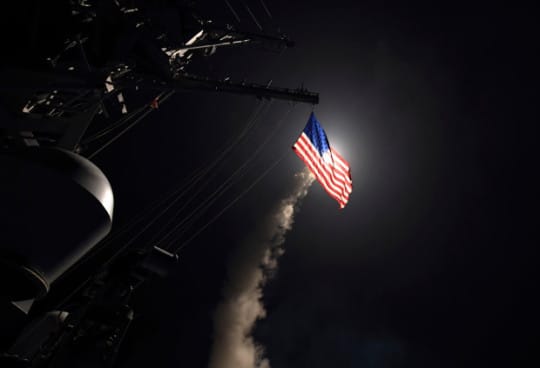
I still have trouble getting over the media’s response to the United States’s attack on Syria, though equally am I unsurprised. From headlines like “A Strike in Syria Restores America’s Credibility in the World” by Tom Cotton in The New York Times, to “In Syria Attack, Trump’s Heart Came First” by Mark Landler in the same paper (though the title was quickly softened after publication for obvious reason), it is a glaring example of how when America goes to war, its media establishment instantaneously transforms into monolithic state propaganda. It’s an amazing phenomenon to watch, really, as much as it is disturbing.
Is it any wonder anti-war movements find it so difficult to gain a footing in public consciousness, in the moments when they are most potently and obviously necessary? This, I believe, is why it is so important that an anti-war, anti-militaristic national ethos must be continuously cultivated and fought for during those periods even when war isn’t making the front page news. Virtues needed to deal with moments of crisis can only be developed over the long-term, before those crises are at hand.
This was what Aristotle, when teaching on the formation of personal virtue, was getting at when he wrote that the beginning given to a child when they are young don’t just make a difference, it makes all the difference, for the habits and imagination determine what will be done when it counts.
Much in this way, no movement in resistance to momentous powers and dominant modes of thinking can be effective if its basic principles and aims are not rigorously formed and applied wherever possible over the long haul, particularly during periods of relative calm. Our culture’s baser modes will always prevail and find apologists in its prominent public representatives. C.S. Lewis makes the same point in his wonderful little book The Abolition of Man where he writes:
Without the aid of trained emotions the intellect is powerless against the animal organism. I had sooner play cards against a man who was quite skeptical about ethics, but bred to believe that ‘a gentleman does not cheat’, than against an irreproachable moral philosopher who had been brought up among sharpers. In battle it is not syllogisms that will keep the reluctant nerves and muscles to their post in the third hour of the bombardment.
So too does this apply to groups pushing against violent and deeply entrenched ideologies and historical trends such as the United States’s propensity toward militarism. If we are not ennobled through those mundane but tireless forms of daily practice, constant organizing, and continuous conversation to respond to moments of crises, we will fail to adequately meet the real challenges when they arrive. The interests we are up against will be too powerful, and we too ill-prepared.
Speaking of adequacy, this is merely a brief reflection that crossed my mind as I’ve followed the public conversation over these recent developments, and only skims the surface of the issue, but there is an excellent essay which comes to mind as I think on this topic by Wendell Berry that I would turn you to which explores this idea much further, in his typically beautiful way, titled Thoughts in the Presence of Fear. It was written shortly after 9/11 but remains as, if not more, relevant today as ever. We cannot expect peace to prevail until we have cultivated a culture and a habit of peaceableness, which is something much different from mere pacifism.




Member discussion