Capitalism, Colonialism, and the Irish Potato Famine
Reposted from my column at Medium
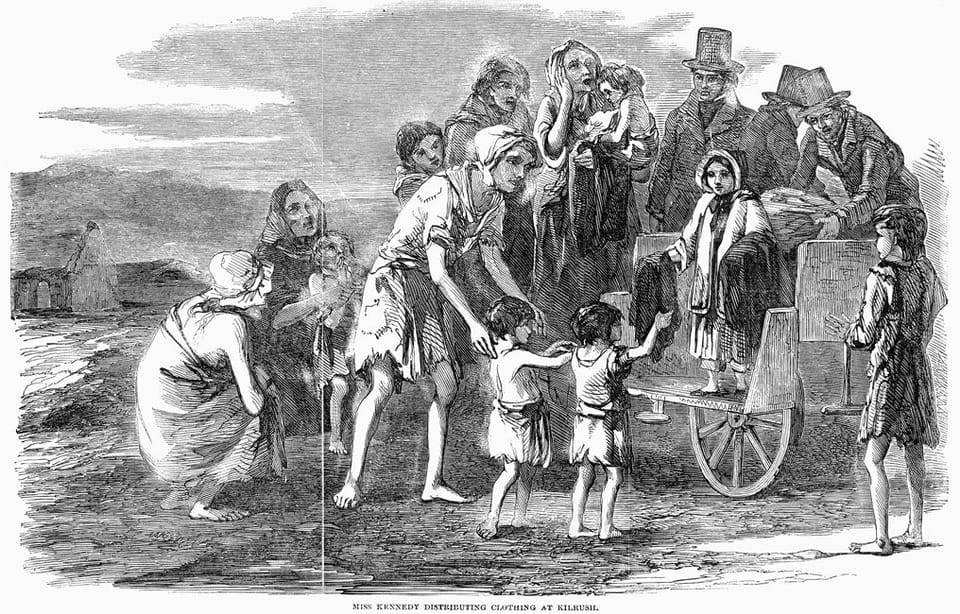
I was pleased today to see a lot of talk on social media about how the Irish potato famine was a product of global Capitalism — emphasizing the oft neglected fact that food production in Ireland was actually more than sufficient to support the population, but there was, even in the midst of the famine’s most brutal years, a greater priority and pressure given to exporting that food than keeping it in the country. (This is also the case for nearly all of the great modern famines in Africa. The origin of famines is almost always political and economic, not natural.)
There’s another capitalist and colonialist dimension to The Great Hunger worth pointing out as well:
The blight that led to the famine was the result of a fungus called Phytophthora infestans, imported to England and Ireland from Peru where infected bird guano was harvested by indigenous slave labor under inhuman and often deadly conditions and exported for use as a cheap but profitable fertilizer in Europe. Dangers of the blight were well known and warned about, including by Charles Darwin, who was particularly concerned and invested a significant amount of his own money towards finding a solution. But as the story too often goes, profit won out.





Member discussion